
The ABC Global Alliance Decade Report: Progress amid growing inequities

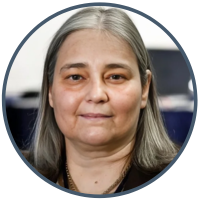 Fatima Cardoso serves as President, ABC Global Alliance and Head of Clinical Trials, Scientific Affairs and International Development in Breast Oncology, Centre Antoine Lacassagne (Nice, France). She is a leading voice in global cancer policy, accessibility, and health equity. As Founder and President of the Advanced Breast Cancer (ABC) Global Alliance, she has spearheaded international efforts to improve care for breast cancer patients.
The ABC Global Alliance recently released its Global Decade Report (2015–2025) at the eighth edition of its consensus conference (ABC8, November 6–8, 2025, Lisbon, Portugal), marking a decade of collaborative work to advance breast cancer care worldwide.
In this feature, we explore the remarkable progress achieved over the past 10 years, examine emerging unmet needs in breast cancer care and discuss strategic solutions outlined in the newly launched ABC Global Charter (2025–2035).
Could you provide an overview of the global record report discussed at the recent ABC conference?
This year’s ABC8 conference marked 10 years of work of the Advanced Breast Cancer Global Alliance. We looked back at the past decade, and reviewed progress made and remaining challenges in the field of advanced or metastatic breast cancer. These results shaped our 10 goals for our new ABC Global Charter for the next decade 2025–2035.
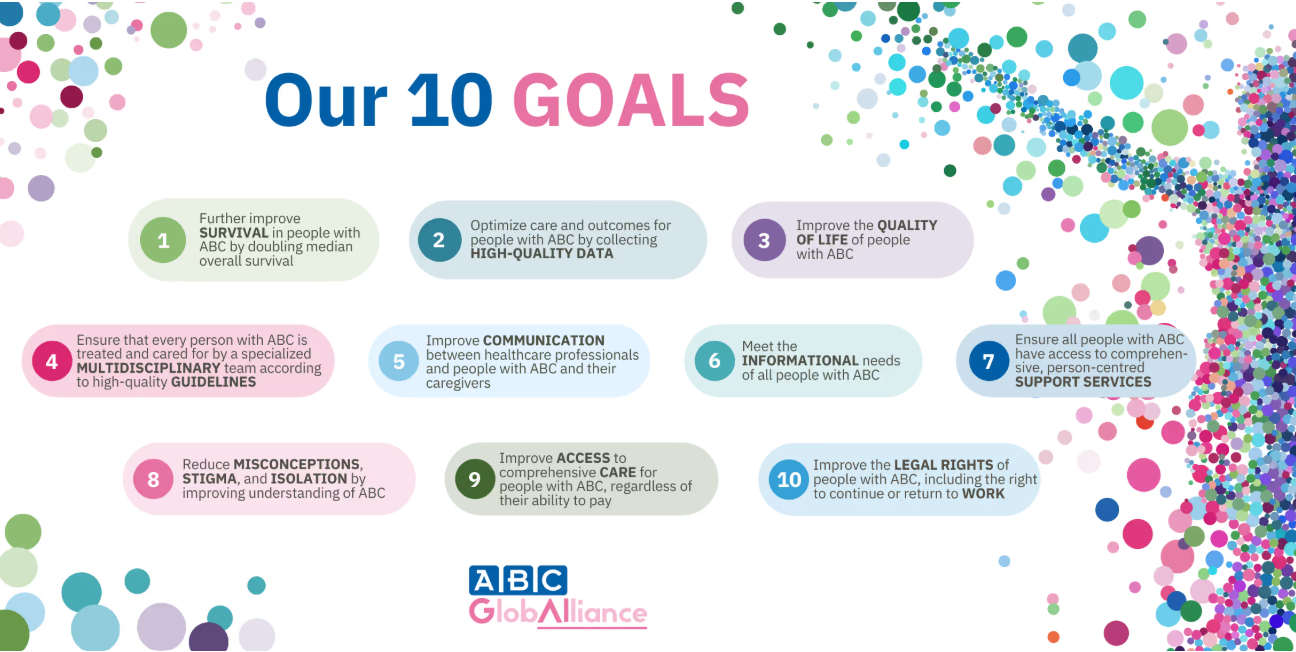
For context, 10 years ago, one of the first efforts undertaken by the ABC Global Alliance was the first decade report, reviewing the decade 2005–2015. At that time, advancements were extremely slow and a lot remained to be done for these patients. That led to the creation of the ABC Global Charter, with measurable and achievable 10 goals, which has united the ABC community and our work in the decade (2015–2025). At this year’s conference, it was time to see how much progress had been made and what hadn’t been achieved in this decade, resulting in the second decade report.
The decade report shows that we have seen greater advancements overall. However, these advancements have not been equal. For example, for survival, we have seen an improved survival for two of the three subtypes of breast cancer. Initially, median overall survival of advanced breast cancer (ABC) was between 2–3 years. We now have a median overall survival of about 5 years for both HER2-positive breast cancer and ER-positive/HER2-negative advanced breast cancer. It is not uncommon now that we see patients living 10 or more years with metastatic disease. However, the advances were very small for triple negative ABC. Furthermore, to achieve 5-year median overall survival you need access to different and innovative treatments. And all these different types of treatment, particularly those that have really been breakthrough treatments in improving survival, are quite expensive. Making them unfortunately not accessible to the majority of patients with ABC around the world.
What is also very clear from the Decade Report is that, for our goal regarding accessibility, things have not improved. On the contrary, accessibility has become more unequal during the last decade. The gap has widened both between countries and within each country. It is unfortunately not uncommon today that we need to treat patients within the same country in a different way, according to their capacity to pay or their coverage. That is quite sad at this time of the evolution of medicine that it is so unequal among patients. There are other findings, but I’d like to note that for every step forward, there are also new challenges and new gaps that we need to address.
You touched on the issue of drug access and inequities. How can we ensure that drug approval decisions don’t inadvertently worsen global health inequities?
In my view, the whole system of both drug development and drug funding is broken and needs to be changed.
All stakeholders need to work together to see how we can change and improve the system. New treatments that are reaching the market are too expensive for any health system. It is my estimate that only about 10% of breast cancer patients are actually able to access these treatments globally.
As we discussed at ABC8, it’s even bad business because if you develop something and only 10% have access to it, you’re losing 90% of your potential clients. Even from a business point of view, it is not a good system. It is, however, very complex because the costs of drug development are extremely high. We know that governments rarely invest in drug development. The ones that invest in drug development are pharmaceutical companies. And of course, they are a business and they must make their own decisions based on what’s best for business. I’m not criticizing that. I think we have to understand each other’s roles in the system.
However, there are things that could make clinical trials less expensive. They are currently extremely bureaucratic, with have huge requirements from regulators, many of them unnecessary, which make trials very expensive.
It is my estimate that only about 10% of breast cancer patients are actually able to access these treatments globally.
Obviously, once you spend a lot of money developing something, you want to recover that money. The other issue we need to deal with is the duration of patents. The patent starts counting very early on when the drug is still in preclinical development, but it takes so many years to go from preclinical to clinical and then all phases (Phase I, II, III, IV), until it is finally approved. When the drug reaches the market, a substantial part of the duration of the patent has passed.
Furthermore, there is a huge attrition rate. If you start with 100 possible treatments in the preclinical setting, maybe three will reach clinical development. And of those, maybe one will get approved.
Maybe we need to discuss having longer patents or start counting the patent from the moment the drug reaches the clinic. Or another solution that would allow the investment to be recovered over a longer period. In this way, you could have lower prices, since you would have more time to recover your investment.
There are several potential solutions, but something must be done because the way it is now, it’s becoming unaffordable for everybody, even for very rich countries. They are reaching a point where even they cannot make it available, even for patients who can pay.
 ABC8: New advanced breast cancer guidelines spotlight drug access barriers
Read this news story from the ABC8 conference, which focuses on healthcare inequities in breast cancer treatment options.
I find that regulators such as the EMA and US FDA, are still quite isolated from other stakeholders. For example, what distinguishes ABC is that we have always worked hand in hand with patients and the guidelines are developed together with patients. The discussions are done with the patients because they are the end users. You need to pay attention to their needs. I think the regulators are quite isolated and they don’t discuss with us and with patients. They would benefit from listening to different perspectives on the same problem.
For example, the fact that a regulator approves everything that is statistically positive, I don’t think that is a very good service to the patients, because payers will not know which ones to prioritize. So maybe they will prioritize according to the price. And maybe that’s not a good criterion to prioritize by.
I’m not saying that you cannot approve everything that is statistically positive, but there should be one way to prioritize and say these results are top-level and this treatment should be prioritized by the payers. Or this treatment provides a very small benefit and therefore, you should only approve it if you have enough money. This would really provide guidance that the payers need in the individual countries.
For countries with limited resources, that would be a huge help, and it would avoid decisions on what to make available for patients, as it would be based on science.
With multiple new drugs arriving simultaneously, how would you advise clinicians approach treatment sequencing in the absence of comparative effectiveness data?
This is one of the major discussions we had for the ABC consensus guidelines, as this year we’ve seen a huge number of treatments arrive. Some of them are even within the same class of agents. For example, several oral SERDs, several PIK3CA inhibitors.
How do you prioritize in your own country, which one you want to be reimbursed and available? And if you have them, how are you going to use them? Because they were not (and will probably never be) compared one to another, they were compared to the previous standard of care. We also don’t know if they work sequentially. For the moment, what we can do and what we have done for the guidelines (which will be published in the manuscript) is to put the level of evidence and the grade of recommendation, as well as the ESMO magnitude of clinical benefit score.
We hope that these additional pieces of information can provide guidance on which one seems to be the best. I say “seem” because they were not compared to each other, so we cannot be 100% certain. So, we try to guide using the totality of the data and what seems to be the best option.
But there are many unknowns, and the best sequence is one of the unknowns. In addition, it will be extremely hard for us to conduct any trial that will tell us the best sequence.
I’ve tried that previously, when I was younger and maybe naive, and thought we could have a clinical trial with several pharmaceutical companies and study the different sequences. But that has proven to be basically impossible to run a trial like that, as it is very complex both logistically and financially. That’s where new tools, such as real-world data and artificial intelligence to analyze big data, will help us in the future. For example, when these treatments are available, it would be beneficial to look at patients who had different sequences and try to understand – from the characteristics of the patients – which is the best sequence for different types of patients.
It’s going to be a very tough job to reach that conclusion, but I think it would have to be done through another methodology, which is not a traditional clinical trial. And our conclusion might be that there is no optimal sequence for everybody, possibly it will be different according to the different patients, because perhaps the tumor has different characteristics throughout the evolution of the disease and different mechanism of resistance.
My dream is that in the future, we could – with a better liquid biopsy than we have today – analyze the biology in a serial way, and then find out what treatment that tumor needs at that precise moment. That is still a dream, but I think we are closer to that than we were 5–10 years ago.
You’ve touched on some tools that oncologists could use to navigate those choices. Did you want to add anything on about resource-limited settings, any framework or tools?
I don’t like to use the word “resource-limiting”, because I think that we are all resource-limiting, let’s say settings that are struggling even to fulfil the basic needs of patients.
When I work with healthcare professionals from these countries, I always emphasize that you cannot build a house starting from the roof. You have to concede that these new expensive treatments are like the roof of a house. Therefore, you have to focus on the basis of care first – early diagnosis and early access to high-quality treatment.
Leaving the disease to reach a very advanced stage makes the probability of successful treatment much lower. You also need a proper diagnosis, which is the basis for providing appropriate treatment. The Decade Report shows that it’s not just the access to treatment that is unequal, it’s also the access to correct diagnosis. High-quality pathology is fundamental for every tumor treatment, and it’s lacking or totally out-of-pocket in many countries. Good quality imaging is also vital, so that you perform the diagnosis and also verify the effect of the treatment, however, this is also frequently not available or not accessible.
you cannot build a house starting from the roof…you have to focus on the basis of care first – early diagnosis and early access to high-quality treatment.
Essential medicines, a list developed by WHO, are needed to treat about 80% of all cancer cases. But unfortunately, even these essential (and mostly not expensive) medicines have very frequent shortages. These are usually drugs that already have generics or biosimilars, so they cost less and sometimes do not provide the benefit that pharmaceutical companies want. There need to be incentives from different governments and regulators for these drugs to continue to be produced and to be available.
These shortages occur even in high-income countries and are even worse in low and middle-income countries. Tamoxifen, which is a fundamental drug in breast cancer, is lacking in many European countries. And if you don’t have tamoxifen, how can you treat young women? You have to induce menopause. In the metastatic setting, that’s not a big problem because we need to induce menopause. But in the early setting, why would you induce menopause in young women if it is not needed to treat the cancer?
The message is focus on the essential medicines list first. Then, once you have all those things sorted, you can start thinking about picking the expensive drugs that truly make a difference. My suggestion is always to prioritize the ones that have a substantial survival benefit, because that’s where you will find that your investment is compensated by what you achieve. For example, almost all anti-HER2 therapies provide a survival benefit. So, if you have trastuzumab, pertuzumab and trastuzumab-deruxtecan you can treat a patient with HER2-positive metastatic disease for a large number of years. CDK4/6 inhibitors for ER-positive/HER2-negative cancer also improve survival and can delay the use of chemotherapy and its associated complications.
One of the ABC Global Alliance initiatives is to adapt the ABC guidelines to the different regions or countries, to help them prioritize what they should have access to.
Which area of breast cancer research or care would you like to see prioritized in the next 5 years to improve patient outcomes?
We still haven’t discussed the advances and shortcomings in the other goals, in this interview. What we have seen in our report is that supportive care is often forgotten and, even when available, very often out of pocket. For example, psychological support, physiotherapy, social support, financial support, all of those additional needs of patients and caregivers that can improve quality and length of life, especially for those who live a long time with an incurable disease that demands continuous treatment. These supportive services are crucial.
I would like to see them more covered by the health systems globally. The lack of coverage for many of these services is a problem in several countries, not just low- and middle-income countries. For example, coverage of palliative care is an issue in many countries, including European countries. I would like to see that covered better as well as an earlier integration of palliative care. People always confuse palliative care with end-of-life care. That’s not the case at all. Palliative is hand in hand with supportive care, symptom control and an improved quality of life.
We have seen some advances in quality-of-life initiatives in this decade, but again these have been very unequal. One of the research projects that the Alliance is involved (in collaboration with the EORTC) is developing better tools to measure quality of life in the metastatic setting, because we are always using tools that were developed for the early setting. We need dedicated metastatic tools.
Of course, we must continue fighting against stigma and misconceptions. The internet has brought us wonderful things and possibilities, but also a lot of confusion and misinformation, some of which may be quite hurtful for patients with cancer. We need to continue to fight against the stigma and misconceptions around cancer.
There’s a lot to be done. The last point I’d like to mention in relation the analogy of building a house in a proper order is access to multidisciplinary care. There are now a huge number of new techniques and approaches. For example, for local treatment of metastasis, both for brain, bone metastasis and for other types of metastases. Access to those treatments is fundamental. Accessibility to multidisciplinary care is a key pillar of the Global Alliance, meaning to never forget that patients’ needs to be treated according to evidence-based guidelines, and their care discussed within a multidisciplinary tumor board.
The opinions expressed in this interview are those of the author and do not necessarily reflect the views of Oncology Central or Taylor & Francis Group.
Financial disclosures:
Consultancy role for: Amgen, Astellas/Medivation, AstraZeneca, Bayer, Celgene, Daiichi-Sankyo, Eisai, GE Oncology, Genentech, Gilead, GlaxoSmithKline, Iqvia, Macrogenics, Medscape, Merck-Sharp, Merus BV, Mylan, Mundipharma, Novartis, Pfizer, Pierre-Fabre, prIME Oncology, Roche, Sanofi, Samsung Bioepis, Seagen, Teva, Touchime.
Financial disclosures related to the ABC Global Alliance:
Corporate membership/sponsorship: Astra-Zeneca, Boehringer, Daiichi-Sankyo, Gilead, Lilly, Merck-Sharp, Menarini, Novartis, Pfizer, Roche