
Glucose test strips detect breast cancer markers HER2 and CA15-3 in saliva
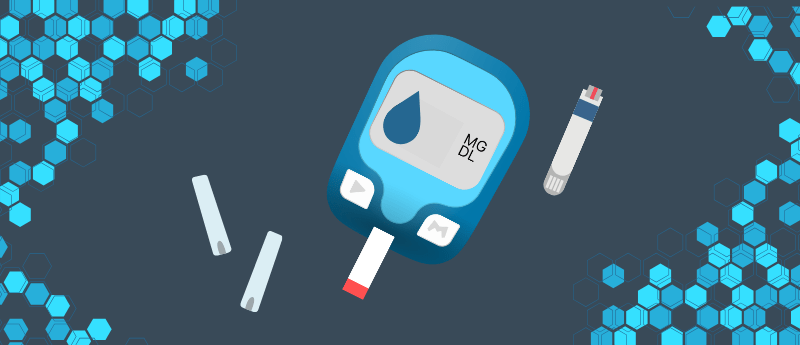
Commercially available test strips intended to monitor glucose could enable the breast cancer biomarkers CA15-3 and HER2 to be detected in saliva at home and in real-time.
A device based on glucose test strips has demonstrated that breast cancer biomarkers could be identified from saliva, determining in near real time whether someone had breast cancer and what type. Approximately 1 in 8 US women will be diagnosed with breast cancer in their lifetime but women often delay attending screenings due to fears about discomfort or inconvenience.
In this work, researchers led by Josephine Esquivel-Upshaw at the University of Florida (UF) Cancer Center (FL, USA), in collaboration with the National Yang Ming Chiao Tung University (Taiwan, China), developed the handheld device, based on reusable printed circuit boards, to detect HER2 biomarkers. To analyze a saliva sample, a commercially available glucose test strip is immersed in the sample for 3 seconds before being inserted into the strip connector on the circuit board. The results are displayed on screen to the clinician and transmitted via Bluetooth to a tablet or phone.
“We were able to shrink the sensor platform so it fits in the palm of your hand, which was our whole drive: to make this accessible and portable for patients to be able to use,” explained Esquivel-Upshaw. “The portable design means it’s a promising alternative for breast cancer detection and monitoring, particularly in rural communities.”
In 29 patient saliva samples, the device correctly identified breast cancer patients 100% of the time and correctly identified patients who did not have breast cancer 86% of the time. The device has lower limits of detection and higher sensitivity than the current standard test, ELISA, and was also able to quantify CA15-3, a glycoprotein that has been extensively used as a circulating biomarker for monitoring disease progression and treatment response.
“It’s very exciting because this device could improve access to breast cancer screening and significantly reduce health care costs,” commented Coy Heldermon, UF Cancer Center. “If all holds true, it would be a game-changer.”
 Barriers to cancer care in SAARC countries
Learn how the inadequate healthcare infrastructure and disparities in rural and urban areas lead to barriers to cancer care in SAARC countries.
The team hopes that a simple test could increase participation in screening programs by serving rural or underserved communities through mobile healthcare units and monitoring patients’ conditions remotely. They also hope it could be used to identify patients who would benefit from further testing, such as a mammogram or an MRI and believe that in the future, this or similar biosensors could be applied to screen for a range of diseases.
“You send in some spit or better yet have the sensor sent to you, it does the measurement and if it’s positive, you get sent for additional testing,” Heldermon concluded. “That is so much more practical and would have so much better uptake among patients.”