
EHA 2026: Early intervention with teclistamab achieves deep remissions for high-risk smoldering multiple myeloma
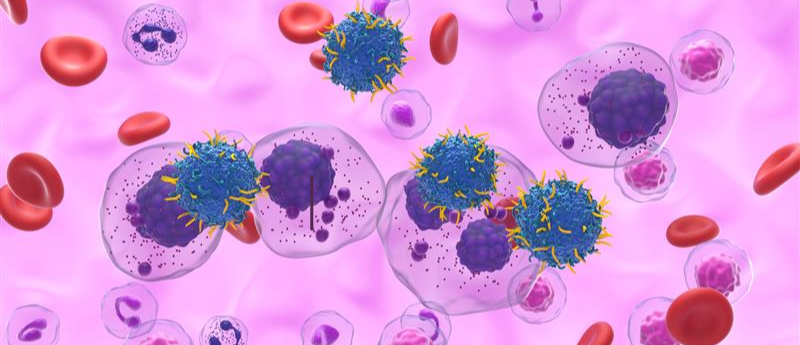
Encouraging positive results have been reported from the Phase II ImmunoPRISM trial, a first-of-its-kind randomized trial of teclistamab, a BCMA-targeted bispecific antibody, in high-risk smoldering multiple myeloma.
Teclistamab outperforms standard combination therapy
In a first-of-its-kind randomized trial, Dana-Farber Cancer Institute researchers found that teclistamab may significantly improve outcomes for patients with high-risk smoldering multiple myeloma, a precursor condition that can progress to active cancer. In the Phase II ImmunoPRISM trial, the BCMA-targeted bispecific antibody outperformed lenalidomide plus dexamethasone, pointing to the potential value of using immune-based therapy earlier in the course of the disease.
The results were presented by Omar Nadeem, MD, Medical Director of the Center of Early Detection and Interception of Blood Cancers at Dana-Farber Cancer Institute (MA, USA), in a late-breaking session at the European Hematology Association Congress (Stockholm, Sweden, June 11–14 2026).
Striking response rates and deep remissions
Three-quarters of patients receiving teclistamab (75.6%) achieved a complete response, compared with none in the group who received the combination therapy. Teclistamab also drove exceptionally deep remissions based on highly sensitive testing. Among patients who could be evaluated for minimal residual disease (MRD), a measure of whether cancer cells can still be detected at very low levels, 82% of those in the teclistamab group became MRD-negative. No patients in group that received combination therapy achieved MRD negativity. All MRD-negative responses remained ongoing at the time of the data cutoff.
“These are striking results because this is the first randomized study to show that a BCMA-targeted bispecific therapy can outperform a lenalidomide-based approach in high-risk smoldering myeloma,” said Nadeem. “We saw rapid, deep responses, including a high rate of complete responses and MRD negativity, and those responses have remained durable so far. These findings suggest that treating patients earlier — before they develop symptomatic multiple myeloma — may meaningfully change the trajectory of the disease.”
Rationale for early intervention
About 50% of patients with high-risk smoldering multiple myeloma will progress to active multiple myeloma within two years. Current standard of care for high-risk smoldering myeloma is observation, however a combination of lenalidomide plus dexamethasone has been shown in previously clinical trials to delay progression.
Teclistamab, which engages both cancer cells and T cells to redirect T cells to the cancer, is approved for the treatment of relapsed/refractory multiple myeloma. T-cell redirection, however, might be more effective if used earlier in the disease process, before patients are exposed to therapies that can increase the chances of drug resistance, and before they transition into full-blown multiple myeloma, which can compromise immune system function.
Trial design and key findings
ImmunoPRISM enrolled 59 patients with high-risk smoldering multiple myeloma based on established risk criteria. Patients were randomized, with 45 receiving teclistamab and 14 receiving the lenalidomide combination therapy. Beyond complete responses, 87% of patients treated with teclistamab achieved a very good partial response or better, compared with 14% in the combination therapy group.
Teclistamab also significantly improved progression free survival, with 7% of patients in the teclistamab progressing after a median 23.4 months of follow up, compared to 36% in the combination therapy group. An estimated 92% of patients will be alive and disease free after two years with teclistamab compared to an estimated 51% with the combination therapy.
While 71% of patients receiving teclistamab experienced cytokine release syndrome (CRS), a known side effect of some T-cell therapies, all were low grade. No neurological toxicities were observed. Other observed side effects were manageable, and rates of high-grade infections were lower than observed in clinical trials of patients with relapsed/refractory multiple myeloma treated with teclistamab.

A hematologist’s guide to the most important abstracts at ASCO 2026
Discover key abstracts from ASCO 2026, including a study that focuses on advancing BCMA-targeted therapy for relapsed refractory multiple myeloma.
“Taken together, these findings provide compelling evidence that early immunologic intervention may be a highly effective strategy for myeloma interception,” said Irene Ghobrial, MD, Director of the Center for Early Detection and Interception of Blood Cancers at Dana-Farber. “By harnessing the immune system before the onset of symptomatic disease, teclistamab may leverage preserved immune fitness and lower disease burden to achieve deeper, more durable disease control and potentially prevent progression to active multiple myeloma.”
This article has been republished from the following materials. Material may have been edited for length and house style. For further information, please contact the cited source. Our press release publishing policy can be accessed here.