
Trailblazing at-home spit test could revolutionize prostate cancer detection
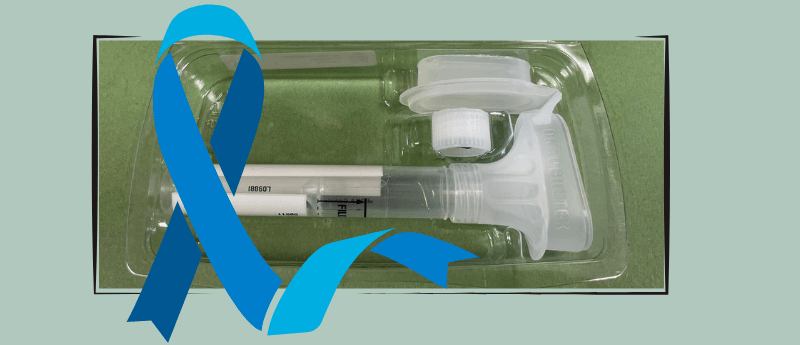
An at-home saliva test could diagnose prostate cancer earlier, saving lives and reducing NHS costs.
Researchers have developed a simple noninvasive test that can calculate prostate cancer risk through droplets of saliva. The team from the Institute of Cancer Research (ICR; London, UK), which led the study, estimates that the innovative approach could diagnose up to 12,350 people earlier each year, saving the NHS approximately £500 (GBP) million annually by reducing the need for costly, late-stage prostate cancer treatments.
Over the next year in the UK, more than 52,000 people are expected to be diagnosed with prostate cancer. Around a quarter of these cases will be identified at a later stage, requiring more extensive and expensive treatment.
 Can crystals in dried blood illuminate the early signs of prostate cancer?
New research highlights how light-based analysis of blood samples can detect early cancer stages with 90% accuracy.
A £2 million study, funded by the NIHR, aims to recruit 1000 people aged 4055 from diverse ethnic backgrounds to evaluate the novel saliva test over 3 years. The test uses DNA extracted from saliva to calculate a genetic risk score for prostate cancer, identifying individuals at higher risk who can then undergo further screening.
Due to a lack of data availability, the first version of the test could only be used for people of European heritage. However, the updated version of the test, named PRODICT, identifies more cancer-indicating genetic variants and can be used in diverse populations.
Zsofia Kote-Jarai (ICR) who developed PRODICT, commented: “We have uncovered hundreds of rare and common genetic variants that are linked to prostate cancer – some of these are linked specifically to aggressive disease, and some are found only in men with African ancestry. I hope that our PRODICTTM test will play an important role in reducing health inequalities men face, as Black men are twice as likely to develop prostate cancer but are too often diagnosed later.”
In earlier trials, the test proved to be effective and more accurate at identifying the future risk of prostate cancer for high-risk men than the current standard PSA blood test.
Ian Mason, an earlier participant, credits the saliva test with identifying his high risk for prostate cancer, allowing for early diagnosis and successful treatment. “I was referred by my GP to join the study 4 years ago and following a saliva test I was told I was in the top 10% for risk of developing prostate cancer. No one in my family has had the disease and my PSA score was low, so I was really shocked.”
“Whilst on the trial I had yearly PSA tests and MRI scans and in April I received the news that I had prostate cancer. Shortly after my diagnosis I was treated with surgery at The Royal Marsden (London, UK), and I have since been recovering well. I’m incredibly grateful that due to the simple saliva test my risk was identified and I was closely monitored, and I was therefore diagnosed at a treatable stage,” Mason added.
If the PRODICT trial is successful, it could be the first of many non-invasive saliva tests to improve healthcare by offering simple, genetic screening that helps catch cancers earlier, improving outcomes and reducing healthcare spending.