
Patient advocacy and global collaboration in cancer control
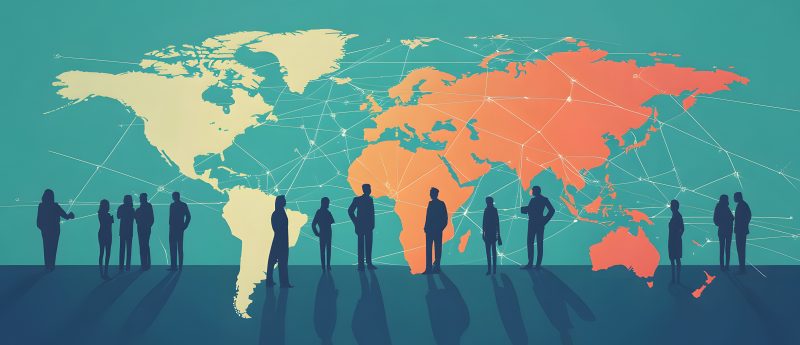
In this interview, Christopher Jackson (University of Otago, Dunedin, New Zealand) discusses his role as an advocate and his involvement in establishing a National Cancer Agency in New Zealand. He also highlights the importance of global collaboration and knowledge-sharing for cancer control.
What motivated you to work in oncology?
In some ways, I stumbled into it during my training. One thing I knew was that I really liked talking to people and enjoyed that aspect of medicine. I explored lots of different medical areas during my general training and initially thought I wanted to pursue palliative care. There wasn’t a palliative care job available when I started my specialist training, so I spent some time in oncology and found that the environment really spoke to me.
The first thing was the patients. The relationship I had as a doctor with my patients was very different from any other area of medicine I’d experienced. The way you got to connect with patients over longer periods, in one of the most vulnerable times of their lives, meant that you could make a huge difference.
I think you have to have a different mindset to do oncology. You have to get the idea that you’re not going to cure people, and for a medic that’s a new thing to get your head around because it’s what you think you need to do when you pursue a career in medicine. But actually, oncology is not about that, and I learned pretty early on that you don’t have to cure someone to make them better. That improving and addressing symptoms, shrinking their cancer for a period and bearing witness to what they’re going through is heaps. It is a wonderful environment to work in as its really team based and everyone is in it together.
So, you turn up to work every day, with a great bunch of people by your side, you’re doing work that absolutely makes a difference, you’ve got patients who really want to work with you and it’s magical. I am so glad that 20+ years later, I am still really loving it for all those exact same reasons.
Can you talk about your commitment to being a patient advocate?
When you spend a lot of time with patients listening to their stories, you hear echoes of the same story. I look after people who’ve almost always have incurable cancer. When you listen to their stories; you start to see patterns. So, I treat bowel cancer and one of the things I heard a lot was people had delayed diagnosis and why was that? Well, it wasn’t anything that I’d done, it was an upstream determinant, which was access to diagnostic services.
I realized that if I was ever going to help a person in my clinic, I had to work on the upstream determinants. I had to work on access and improvements to diagnostics, earlier access to primary care, better and fairer access to early treatments, greater symptom recognition and access to screening, as we had no screening program when I started.
It became very clear if I wanted to help the people I worked with, giving them drugs was only a small part of the equation, most of the work that was needed was upstream. I love the people I work with; they trust me so much to look after them. So, the thought that if I could even stop patients from walking through the door in the first place by preventing their cancer from ever getting to that stage, was pretty motivating.
There are other issues around drug access for people with advanced cancer. In New Zealand, we had relatively restricted access compared to even the UK at that time and knowing there were treatments that could help them that they couldn’t have felt wrong. So, working to advocate for fairer access to effective medicines is pretty motivating, to know that you’d help the people in front of you.
Over the last 20+ years, I’ve seen things improve as a result of partnerships between patients, doctors, NGOs, patient organizations and politics. These changes appear over time. You realize whilst in some ways every year feels like you’re getting nowhere, you look back over 5 years and you realize how far you’ve come, which makes it worthwhile.
Those battles make it worthwhile to know that if you keep turning up, working hard, sharing the stories and hollering the issues that ultimately things do move in a better direction. That means that the people I look after today have a better deal than those I looked after 10 years ago or 20 years ago. I hope the same will continue for the rest of the time I’m working.
Could you discuss your involvement in establishing a National Cancer Plan and National Cancer Agency in New Zealand?
One thing New Zealand didn’t have when I began working in oncology was a National Cancer Plan, the first one was created in 2003. We hadn’t had a National Cancer Plan for about roughly 20 years and I was involved in the research with the International Cancer Benchmarking Project funded by Cancer Research UK, through the New Zealand Cancer Society.
We have a universal healthcare system. We fund about 10% of GDP, so slightly less than average but not hugely off. We’re an OECD high-income country and it felt like we could be doing better. So, we started researching New Zealand’s cancer outcomes and found gaps in care and a really big postcode lottery in cancer care.
We funded research through the International Cancer Benchmarking Project and started looking at comparatives between New Zealand and six other high-income countries. We saw that over 15–20 years, New Zealand’s progress in cancer was less than in our comparable countries. Therefore, we had done less with what we had than other countries had, which felt like a real failure of leadership in that we weren’t serving the people of our country to the best of our ability. We started looking at why that was and the reasons seemed to me to be political.
They seemed to be political will, funding, structure and planning and the subsequent funding of that planning. So, we thought that things had to change. We tried different things over a number of years, including engaging greatly with governments, policymakers, bureaucrats around policy writing, and so on, and found that actually not much changed through direct engagement.
So, we thought we needed a step change in the public attitude towards cancer. A colleague, a patient advocate and myself started a national campaign based on better cancer care for all New Zealanders, that would get rid of the postcode lottery of cancer care, to be led by a National Cancer Agency and the public. The idea of better cancer care for all New Zealanders, no matter who you are and where you live, really resonated. When the data showed patients weren’t getting a fair go and could have been doing better than they were, when people understood that cancer patients who they loved and cared for could have had longer or maybe not had cancer at all they went, “Yes, people I care about, I’d like to help them too.”
So, the public really got behind us, and it became such a massive political issue that all political parties eventually started fighting over and saying who would do more for cancer than each other. Eventually, the government announced the National Cancer Agency would be led by my colleague, which led to a new national cancer plan. Shortly after, we almost doubled the funding for cancer drugs, which has had a massive impact.
We’ve seen a huge transformation in the last 4–5 years as a result of that campaign, which was through collaboration with the public to show what we could do differently by sharing the human toll of cancer and what that meant for people’s lives. We highlighted authentically, truthfully and hopefully that we could do better and here’s how. All we have to do is try. People found that very persuasive, and now I’ve been given a chance to deliver on that.
Do you think your role as an advocate helped shape some of the cancer care policies?
One hundred percent, undoubtedly. There was a very clear connection between the campaign and the state from the agency and drug funding. It was very clear that it would never have happened without the public campaign. I think governments largely want to do the right thing, but they’ve got many priorities. As an advocate, you need to make something a priority. We made cancer a priority, it is important to people and it does matter.
What we helped New Zealanders understand was that their leaders could do better if they wanted to and were shown a clear pathway for how that could be achieved. When people saw that, they challenged their leaders and said: “Well, why aren’t you doing that?” The leaders had no good answer. At that point, everything fell into place. But it was only through that collaboration between academics, clinicians, researchers, policymakers, the public, the media and science communicators, that made the politicians want to change, and it’s totally different as a result.
Could you explain why global collaboration is essential when thinking about cancer control?
Fundamentally, progress is the art of the possible. Every country is in a slightly different place in the cancer control journey. One thing that unites us all is that cancer is awful, and it’s one of the worst things that can happen to you, or happen to someone you love, and we all want to see the fight against cancer be done better at a systems level.
I think that sharing knowledge and lessons is key. Sharing some of those soft things that you’ve done that had a pretty big impact can help advocates and leaders who may not have all the natural levers of power, such as government or funding, to be effective in convincing the people who do have those levers is a powerful thing to do.
For me, getting involved with UICC, the Global Cancer Control Board is very much focused on learning from others, learning what they have done in their journey to bring their home and also sharing our successes and to potentially help other countries who aren’t in the same space as us, make those same gains. I think I’ve made a lot of mistakes and had a lot of failures in the duty of advocacy in the fight against cancer. If I can help someone else have fewer that’s a good thing.
Those lessons of failure are hard. They are painful, and they feel like massive setbacks at the time. But ultimately, we would never have succeeded or learned without all of those experiences that came before. But I’d love to share the blood, sweat and tears with others so that maybe their paths are a wee bit easier, or if they’re hitting a roadblock that we’d also face, we could say, “Oh, we tried this and it worked,” and hopefully they would have success sooner than we did.
How would you like to see cancer control improve over the next 5 years?
Faster, quicker, better – that’s how I’d like to see it. Look, there is absolutely no doubt that we are doing better against cancer than we were 5 years ago or 10 years ago, but it’s just changed enormously. It’s pretty exciting to think about where we might be in 5 years, where technology is taking us. There are some huge headwinds though such as population changes, the cost of cancer is growing, the financial incentives for people to provide low-quality care, or interventions of marginal benefit for commercial gain are pretty strong.
We’ve got a real test of institutional integrity to deliver sustainable healthcare of high quality that matters to people, and to make that sustainable so there’s enough money for the stuff that truly makes a difference. There are a lot of threads pulling the system in many different directions and making sure it goes in the right one is a challenge.
How would I like to see Global Cancer keep going? I’d like to see it retain its passion. I’d like to see it retain its humanity. I would like to see it continue to serve the people who trust it over and above the commercial interests that try and distort it, and would like to see it done so in a rigorous, evidence-based, sustainable way, which fits with the broader social goals of sustainability, climate sustainability, universal healthcare coverage and the elimination of terrible things like tobacco and so on.
I am optimistic. I am not quite sure where it’s going to be in 5 years, but I know it will be better.
Interviewee profile:
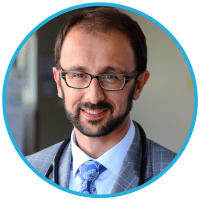 Chris Jackson is a medical oncologist based in Dunedin, New Zealand and a Professor of Cancer Medicine at the University of Otago in Dunedin. He was Medical Director of the New Zealand Cancer Society for 6 years, and he is currently the National Clinical Lead for the recently established National Cancer Network. He helped set up New Zealand’s National Cancer Agency approximately 5 years ago. He is now working for the New Zealand equivalent of the NHS to carry out implementation aspects. He’s been involved in a lot of policy work over recent years and is currently implementing those findings. Jackson was recently elected to the UICC board in October, within which he is enthusiastic to work with his global colleagues on issues such as cancer control in New Zealand.
The opinions expressed in this interview are those of the author and do not necessarily reflect the views of Oncology Central or Taylor & Francis Group.