
HistoPathExplorer: A dashboard for exploring AI methods in digital pathology

Digital pathology and artificial intelligence (AI) are transforming oncology diagnostics, treatment and biomarker discovery. When diagnosing cancer, clinicians use a powerful technique called histopathology to examine millions of cells in a tumor in microscopic images. This allows them to uncover critical clues – like whether the tumor is cancerous, how aggressive it might be and what type it is.
AI can analyze a huge amount of images to automatically identify cancer signatures and help doctors make the right treatment decisions faster and more accurately. In the past decade, researchers have developed numerous advanced AI tools showing their potential to improve the precision and efficiency of cancer diagnosis and detection from histopathology images. The rapid pace of research, with nearly one paper published every day, has led to a vast and complex landscape of AI tools.
With more than 1500 papers and methods published in this area, it can be overwhelming to keep up with the trends, especially when trying to identify unmet needs or evaluate the tools or studies that have the potential to transform into clinical care. To help with this, we developed HistoPathExplorer as an interactive dashboard for researchers, clinicians and decision makers to explore the current landscape of AI in digital pathology. Whether you are curious about how AI can help in clinical practice, looking for relevant papers to evaluate options or are interested in developing your own AI pipeline, our dashboard could help support your exploration! Here we provide a quick overview of the HistoPathExplorer website.
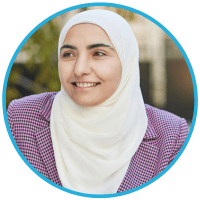 Dr Heba Sailem is a Senior Lecturer and the Head of Biomedical AI and Data Science Research Group at King’s College London (UK). Dr Sailem has led the development of several innovative computational and visualisation tools that are advancing the analysis and interpretation of complex biomedical data, including AI in Histopathology Explorer. In 2022, she was awarded a prestigious eight-year Wellcome Career Development Award to investigate the complex interactions within the tumour microenvironment. Her lab’s work is highly interdisciplinary, integrating insights from histopathology, genetics, pharmaceutical sciences, and cell biology.
Before joining King’s, Sailem held a Sir Henry Wellcome Postdoctoral Fellowship and was a Junior Research Fellow at the University of Oxford. There, she developed machine learning techniques to address major challenges in pattern recognition and interpretability in large-scale biomedical imaging.
The opinions expressed in this interview are those of the author and do not necessarily reflect the views of Oncology Central or Taylor & Francis Group.