
Highly sensitive ctDNA detection platform can predict lung cancer outcomes
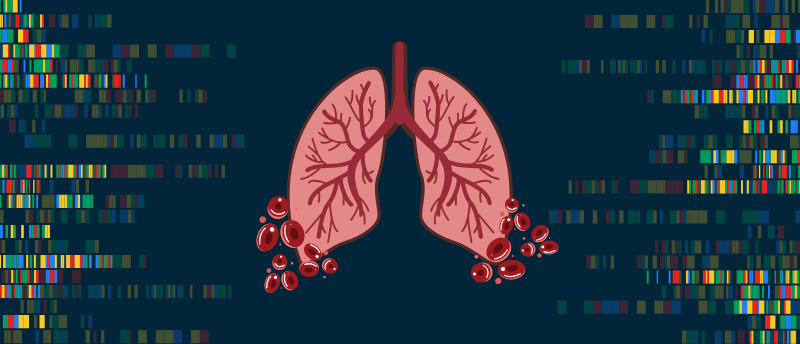
NeXT Personal platform detects ctDNA from blood samples of lung cancer patients allowing for early identification of relapse.
A team of scientists from the Francis Crick Institute, University College London and the University College London Hospitals (all London, UK) have demonstrated that NeXT Personal, a whole-genome-based, tumor-informed platform, can detect circulating tumor DNA (ctDNA) from blood samples of lung cancer patients with high sensitivity and specificity. This test can allow for monitoring of disease outcomes and identification of relapse earlier than with routine clinical surveillance.
Early-stage NSCLC patients remain at high risk of relapse, despite aggressive curative-intent treatment. It is vital to be able to predict which patients are likely to have disease recurrence post-surgeryand which patients , to improve outcomes and minimize overtreatment.
ctDNA is an important marker for disease prognosis and prediction of clinical risk in early-stage tumors. Previous studies have demonstrated that preoperative ctDNA detection in NSCLC could be used to identify early-stage patients with poor clinical outcomes. Further, studies have confirmed that preoperative ctDNA detection in lung adenocarcinoma (LUAD) patients could be used in a prognostic capacity for both overall survival and relapse-free survival.
ZEST trial challenges provide insights into the use of ctDNA in predicting breast cancer recurrence
Data presented at SABCS 2024 emphasizes the importance of early ctDNA testing for the prediction of breast cancer recurrence.
Current detection of ctDNA in early-stage lung cancer patients is challenging due to the low levels of ctDNA found in plasma, which are frequently below 100 parts per million (ppm). Therefore, a high-quality ctDNA detection platform must be ultrasensitive and highly specific to maximize optimal utility.
To overcome this problem, the team used the NeXT Personal platform to characterize ctDNA of 171 patients (94 non-LUAD NSCLC and 77 LUAD) from the TRACERx study before the surgical removal of the tumor. Panels of the NeXT Personal platform are designed using the top 1800 signal-to-noise ranked somatic variants for ctDNA detection from plasma. ctDNA was detected in 100% of patients with non-LUAD NSCLC and 81% of LUAD patients, including 32 LUAD patients in which ctDNA was detected below 80ppm. Additionally, the team detected ctDNA in the blood of 57% of patients with pathological tumor node metastasis stage I LUADs, which previous studies only detected in 14% of such tumors.
The high sensitivity of NeXT Personal at tumor fractions below 80 ppm allows for smaller amounts of ctDNA to be detected, preventing patients with lower ctDNA levels from being incorrectly labeled as ctDNA-negative.
Further, the team found that patients with low levels of preoperative ctDNA were less likely to have disease recurrence and experienced improved overall survival compared to patients with high levels of ctDNA. This finding, combined with previous research, suggests the potential of ctDNA as a marker for neoadjuvant therapy selection.
“ctDNA testing, especially using ultrasensitive platforms, could help clinicians make more informed decisions about treatment and give patients a more accurate idea of how their disease might progress” commented lead author James Black.
NeXT Personal will next be used to evaluate if ctDNA detection in postoperative lung cancer patients can predict future risk of recurrence, potentially allowing clinicians to offer adjuvant therapy and increase the chance of curing patients.