
Ask the Experts: Breast cancer dormancy and late recurrence
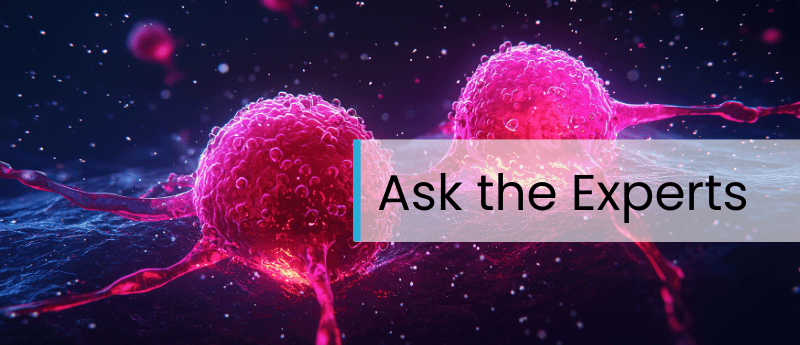
Dormancy is one of the greatest unknowns and challenges in breast cancer care. In this Ask the Experts feature, we dive into the complexities of studying dormant cancer cells and reveal promising developments in gene therapy and immune-based approaches. The experts also discuss the potential implications of groundbreaking research in working towards breast cancer patients and survivors being able to live happy, healthy lives without fear of the disease coming back.
Discover more about this topic from our experts: Penelope Ottewell (University of Sheffield, UK), Simon Vincent (Breast Cancer Now, UK), and Frances Turrell (University of Manchester, UK) and major supporter and campaigner Robert Swannell (Breast Cancer Now, UK). Meet the experts here.
Could you outline the concept of breast cancer dormancy and the impact it has on patients throughout their survivorship journey?
Simon Vincent: Dormancy is one of the hardest challenges we must solve if everyone diagnosed with breast cancer is to live and live well. It is where tumor cells are present after treatment of primary breast cancer, but they are in a prolonged inactive state. Most breast cancers don’t return after treatment. However, breast cancer is known for asymptomatic periods of up to 25 years, with no evidence of the disease, followed by a relapse.
If the breast cancer cells have spread to a different part of the body and the cancer recurs, it will be classified as a secondary cancer (also known as metastatic or Stage 4 breast cancer), which is treatable, but not yet curable. Around 61,000 people are thought to be living with secondary breast cancer in the UK, and 31 women die of the disease every day. Thanks to breakthroughs in the treatment of primary breast cancer, people are living longer than ever. However, this progress means dormancy is becoming a more pressing issue and we need new treatment options to prevent breast cancer from recurring years after initial treatment.

Patricia and Robert Swannell
At Breast Cancer Now, we’ve had the privilege of working with the late Patricia Swannell and her husband Robert, who launched the ‘Patricia Swannell Appeal for Secondary Breast Cancer’ in 2022 to raise funding for critical research into secondary breast cancer, dormancy and late recurrence. The appeal has raised over £1.4 million to date, and we are now funding two major research projects in this area. And one of the key commitments from our new organizational strategy, Change Happens Now, is that we’ll double what we spend on research over the next 5 years, with a focus on the challenges of dormancy and late recurrence.
Robert Swannell: When my wife, Patricia, was diagnosed with secondary breast cancer we were astonished to find two realities. First was how badly women and clinicians were educated about secondary breast cancer, leading to frequent late diagnosis. Second was how little was known about the science behind dormancy and late recurrence. As a result, although women were living longer after a primary breast cancer diagnosis, the number dying from secondary breast cancer remained much the same as it had decades earlier. Patricia died 2 years after her diagnosis with secondaries.
Dormancy is described as “one of the greatest unknowns of breast cancer.” What makes this area particularly challenging to study compared to other aspects of cancer research?
Frances Turrell: A key challenge is that it is difficult to identify and isolate dormant cancer cells from patients to study. We have samples of primary and secondary cancer once it has grown but we need to study the dormant state to understand the biology behind dormancy and reawakening. We have different ways of modelling dormancy in the lab, but they typically fail to faithfully mimic the long periods of hibernation observed in breast cancer patients. It is also very challenging to mimic the complex changes occurring in individuals, which can impact cancer dormancy and reawakening. These include lifestyle and hormonal changes, changes that occur with age, as well as changes that impact the effectiveness of the immune system to keep cancer cells in check.
In breast cancer, these long dormancy periods are typically observed in patients with estrogen-receptor-positive (ER+) breast cancer, the most common type of breast cancer. However, we have even fewer ways of studying dormancy in ER+ breast cancer, particularly how the immune system influences dormancy and reawakening. Finally, we don’t have enough data from the dormancy period in patients. If more information was collected from patients following the end of their treatment, via patient follow-up, we could establish whether there are links between certain events or lifestyle changes and recurrence of the disease. This could help us to determine which individuals may be at higher risk of future recurrence.
There needs to be research on what happens to women at the end of their primary treatment… to identify those who would benefit from further or a different treatment.
Simon Vincent: Little is known about what causes dormancy, and – despite the clinical importance of tumor dormancy – the biology of dormant cells is poorly understood. We need to improve our understanding of dormancy, the role of the tumor microenvironment in maintaining dormancy and in triggering the reawakening of tumor cells as well as the genetic and molecular mechanisms underlying recurrence. We also need to find out at a cellular level what happens to breast cancer cells that become dormant during initial treatment and when it ends.
There needs to be research on what happens to women at the end of their primary treatment, particularly those ending hormone therapy, because we want to identify those who would benefit from further or a different treatment. One area of research could be to establish a cohort of such women who are at high risk of recurrence and work with them to investigate the causes of dormancy and late recurrence. We also need better biomarkers for dormancy and late recurrence as well as improved laboratory models for studying this stage of the disease.
Penelope Ottewell: Breast cancer dormancy is particularly challenging to study because it’s almost impossible to isolate dormant cancer cells from humans. We know which organs are likely to be populated by dormant cancer cells. However, very few cancer cells that leave the primary site survive and seed secondary organs. This means that dormant cancer cells are rare. We therefore need to rely on model systems to work out how dormant cancer cells seed other organs, why cancer cells “sleep” when they arrive in distant organs and what causes them to reawaken.
What do you believe are the most promising developments in breast cancer dormancy research from the past 5 years?
Simon Vincent: One current line of research is looking at keeping cells in a dormant state so that they can’t reawaken. Regulating the tumor microenvironment with drugs may prevent dormant cancer cells from waking up. For example, Clare Isacke and her team at Breast Cancer Now’s (UK) Toby Robins Research Centre at the Institute of Cancer Research (all London, UK) showed that if the level of a protein called PDGF-C increases, which is more likely in an aging lung or when its tissue becomes damaged or scarred, it can cause dormant cancer cells to grow and develop into secondary breast cancer. They targeted the PDGF-C protein with an existing cancer growth blocker, termed imatinib, which is currently used to treat patients with chronic myeloid leukemia. They showed that mice with ER+ tumors treated with the drug both before and after tumor development had significantly reduced cancer cell growth within their lungs.
Frances Turrell: There has been considerable development in our understanding of how different immune populations can control breast cancer dormancy and reawakening. While further work is needed, I believe these represent the most promising developments. Immunotherapy has revolutionized the treatment of many types of cancer in recent years. These therapies work by harnessing our immune system to fight cancer. If we can understand 1) how dormant cancer cells evade detection and attack by the immune system and 2) how, conversely, specific cancer–promoting immune populations may support their reawakening, we can design new immunotherapy approaches to target dormant cancer cells.
Dormant cancer cells are essentially hibernating and therefore resistant to standard anti–cancer therapies designed to target rapidly dividing cells. Immunotherapy approaches represent promising alternative strategies for eliminating or suppressing dormant cancer cells in patients and thus preventing the development of secondary cancer.
Penelope Ottewell: We now understand that dormancy is influenced by the tumor microenvironment. Over the last 5 years, research has shown us that dormancy is regulated by interactions with specific cells known as “niche cells” and that maintaining the stability of this niche is important to prevent re-awakening of dormant cells. Two main regulators of the “niche” are IL-1β and macrophages. Targeting these factors could prevent dormant cells from waking up.

Can you provide further details on research investigating the role of macrophages in breast cancer dormancy and those evaluating gene therapy–based approaches?
Penelope Ottewell: Current strategies to prevent dormant cancer cells from reawakening include a gene therapy approach. This approach involves introducing a small piece of DNA into “niche” cells. This DNA causes the “niche” cells to produce a naturally occurring substance that “switches off” IL-1β. Strong evidence suggests that “switching off” IL-1β prevents re-awakening of dormant cells, eliminating growth of secondary cancers in bone. We will genetically alter human breast cancer cells to make them produce high or low amounts of proteins involved in IL-1β activity. We’ll then observe which bone cells breast cancer cells interact with when they first grow, and how these are affected by IL-1β in human bone tested in the lab. After this, we’ll genetically target relevant bone cells, enabling them to produce IL1Ra.
This project will lay the groundwork for gene therapy–based treatments that can prevent dormant breast cancer cells in the bone from reactivating. Since bone can act as a “reservoir” for these cells, keeping them dormant could also reduce recurrence in organs like the lungs, liver and brain. The team will wish to find the ways in which IL-1β controls dormancy, and we’ll explore if drug s targeting IL-1β should be further developed.
This project will lay the groundwork for gene therapy–based treatments that can prevent dormant breast cancer cells in the bone from reactivating.
Frances Turrell: Macrophages are a type of immune cell. However, they are not just one uniform population – they are incredibly diverse, have high plasticity and perform many different functions. In the context of cancer, some macrophages have cancer-suppressing functions and some have cancer-promoting effects, including at secondary sites. Studies have demonstrated that macrophages have a role in maintaining breast cancer dormancy in the lung. It’s when communication between cancer cells and macrophages is disrupted that cancer cells can grow rapidly into a secondary cancer.
One reason for a potential communication disruption is that macrophages change function. My lab is exploring how macrophage populations change with age and whether age-associated changes in these cells contribute to the dormant cancer cells reawakening in secondary sites. The diversity and plasticity of macrophages make them a unique treatment target and work is now underway to develop therapeutic strategies, to shift macrophages from cancer–promoting to cancer–suppressing.
These strategies are promising, although there are challenges to navigate. These include ensuring specific macrophage subsets are targeted and accounting for the impact of the dynamic and complex microenvironment on macrophage function, which may reverse the treatment–induced functional changes in the macrophages. Cell therapy approaches, where macrophages are engineered so that they always produce molecules involved in cancer-suppressive functions, are also being considered.
How would you like to see this research impact clinical practice?
Penelope Ottewell: The majority of secondary breast cancers occur in bone. If successful, administration of a niche–based gene therapy would prevent reawakening of cancer cells in bone, saving thousands of lives a year. The benefit of the gene therapy approach discussed is that the gene is only switched on if a dormant cancer cell starts to wake up, so it’s unlikely to result in adverse effects.
Simon Vincent: This research could lead to new diagnostics that identify women with dormant cancer cells or who are at higher risk of recurrence. We want to go further and use this information to develop preventative treatments, including drugs or gene therapies, to either eliminate dormant cells or keep them permanently inactive. The follow-up that breast cancer patients receive would become more personalized, helping patients and clinicians make better decisions about long-term treatment plans. Most importantly, this research gives hope that we can intervene earlier, before recurrence begins – offering women the possibility of a life free from the fear of secondary breast cancer.
Robert Swannell: There is still a very long way to go to solve the mysteries of dormancy and late recurrence. We need to tackle this now if tens of thousands of women are to be saved from dying of secondary breast cancer each year in the UK. My hope is that the research we helped fund through Breast Cancer Now will be the catalyst to real breakthroughs in early detection, treatment and, ultimately, cure secondary breast cancer.
Frances Turrell: We can group strategies for targeting dormant cancer cells into two main approaches: eliminating dormant cancer cells or preventing them from ever reawakening. Either approach, if successful, would suppress the development of secondary cancer, extending the lives of breast cancer patients. Through elucidation of the mechanisms by which different macrophage populations control cancer dormancy and reawakening, this research could uncover novel immunotherapy approaches to harness immune cells to kill dormant cancer cells or maintain cancer cells in their dormant state. Further work will be required to establish whether the mechanisms identified are tissue-specific or are relevant across different sites of secondary disease (for example, the lungs, liver or bone), and how existing treatments could be optimally combined.
The long-term objective will be to translate the findings from the preclinical setting to patients. Here, the first approach – eradication of the dormant cancer cells – would be the preferred strategy. The second approach would likely involve a long-term maintenance therapy, which increases the likelihood of side effects from the treatment. We would also need ways of identifying who is at risk of developing secondary cancers that arise after extended dormancy periods and, therefore, who would benefit from additional therapeutic interventions.
…this research could uncover novel immunotherapy approaches to harness immune cells to kill dormant cancer cells.
In future research, it will be important to determine whether we can track dormancy–regulating immune changes occurring in the secondary sites in the patients’ blood. This would be a relatively easy way of monitoring and identifying patients who are at increased risk of their dormant cancer cells reawakening.
What are the implications of this work on the wider breast cancer field?
Simon Vincent: Dormancy is not well understood; we need to understand some of the fundamental biology of dormant cells, what causes them and how we can stop them from reawakening years after initial treatment. By focusing on discovering how dormant breast cancer cells behave in the lung and bone, we will deepen our understanding of dormancy and recurrence, which will lay the foundations for future research.
These projects could also lead to future treatments to prevent dormant cells from waking up and causing late recurrence of secondary breast cancer. More research will be needed to develop treatments for treating breast cancer in women, our funded research could be the start.
We hope that the findings from this research will help ensure people who have been treated for breast cancer are able to live happy, healthy lives without fear of the disease coming back. Our ambition is that by 2050, anyone diagnosed with breast cancer lives and is supported to live well. This is just 25 years away, so we have no time to waste in gaining an understanding of dormancy and late recurrence so we can solve the challenge of breast cancer.
My hope is that this work will not only be valuable for its own sake but will also open up further areas for research – Robert Swannell
Frances Turrell: The principal goal is to identify ways of targeting cancer dormancy, which underpins a critical problem in breast cancer treatment and management, particularly in ER+ cancers. However, immune cells, such as macrophages, have important roles throughout the development and progression of both primary and secondary breast cancers. Delineating the macrophage–mediated mechanisms of dormancy and reawakening will also provide insights into how macrophage populations and functions shift when secondary cancer has escaped dormancy and is actively growing. Therefore, mechanisms uncovered by research in this area will likely inform new treatment approaches for targeting both growing and established secondary cancers, as well as those targeting dormancy. This will have important implications for the treatment of patients who develop secondary breast cancer quickly or already have secondary cancer at diagnosis and potentially broaden the implications of this work to other breast cancer subtypes.
Furthermore, there is evidence that dormant cancer cells can exist alongside established secondary cancer. Treatments targeting dormant cancer cells could be combined with anti-cancer treatments targeting the established, clinically detectable secondary cancer to prevent additional recurrences that may arise from dormant cancer cells in the future.
Penelope Ottewell: Gene therapies have successfully been used to treat many conditions. Successful generation of gene therapies that target cancer-causing or dormancy-regulating genes could provide new, non-toxic treatment avenues.
For more information about The Patricia Swannell dormancy and late recurrence research programme visit: The Patricia Swannell dormancy and late recurrence research funding programme | Breast Cancer Now

 Simon Vincent
Simon Vincent has a PhD in genetics from the University of Nottingham (UK) and has been working with major UK medical charities for over 20 years. He joined Cancer Research Campaign in 2000, which would go on to become Cancer Research UK (UK). He spent most of 2013 on secondment at the Academy of Medical Sciences (UK), supporting early-career biomedical researchers. This involved mentoring, career support and policy development and awarding grants. He came to Breast Cancer Now in 2014, originally leading just the research team. Then in 2020, he became Director of research, support and influencing. He became Chief Scientific Officer at Breast Cancer Now in 2025.
 Penelope Ottewell
Penelope (Penny) Ottewell completed her PhD at the University of Liverpool (UK), before joining the University of Sheffield as a Research Associate. Whilst based in Sheffield, Penny has carried out international collaborative work spending time at INSERM (France) and at TUFTS Medical School (MA, USA). She has been awarded a total of 13 national and international prizes for her research, including the International Bone and Mineral Society Gregory Mundy Research Fellowship. In 2022 Penny was awarded her personal chair as Professor of Cancer Biology in the Mellanby Centre for Musculoskeletal Research (University of Sheffield).
Penny’s work is focused on cancer metastasis with a particular emphasis on breast cancer dormancy and immune cell regulation and the bone microenvironment. Her work in this field is currently funded by AstraZeneca (UK), Bayer (Germany), Medical Research Council (MRC; UK), Yorkshire Cancer Research (UK) and Breast Cancer Now, including the Patricia Swannell Dormancy and Late Recurrence Programme. Penny works on the editorial board for multiple peer reviewed journals, sits on the former NCRI Bone metastasis strategy working group and is a member of the Cancer and Bone Society Executive Committee. She is also a member of the grant review committees for Breast Cancer Now and The National Science Centre (Poland).
 Frances Turrell
Frances Turrell is a Principal Investigator at the University of Manchester and Manchester Breast Centre (UK). Her research focuses on the role of the microenvironment in breast cancer dormancy and metastasis. Prior to starting her own research group, Frances completed her PhD at the MRC Cancer Unit, University of Cambridge (UK) with Carla Martins before moving to the Institute of Cancer Research for her postdoctoral training in Clare Isacke’s group.
Frances and her team are particularly interested in understanding how the microenvironment at secondary sites changes with age and whether these age-associated changes impact the behavior of disseminated cancer cells in hormone receptor-positive breast cancer. Frances’s vision is to understand the crosstalk between cancer cells and immune cells in secondary niches to identify novel therapeutic approaches to target the dormant cancer cells. This year, Frances was awarded funding from the Breast Cancer Now Patricia Swannell Dormancy and Late Recurrence Programme to study age–associated changes in macrophages and their role in breast cancer dormancy and reawakening.
 Robert Swannell
With his late wife, Robert established the Patricia Swannell Appeal for Secondary Breast Cancer. He is a British businessman and former chairman of Marks and Spencer (UK).
Robert and his wife Patricia Swannell launched the appeal with Breast Cancer Now in 2022. The appeal was set up to fund critical work in raising awareness of the signs and symptoms of secondary breast cancer, supporting healthcare professionals with education and training; and developing better testing, diagnosis and treatment through funding research tackling the challenge of dormancy.
Patricia was diagnosed with primary breast cancer in 2007 and, after a mastectomy, chemotherapy and radiotherapy, went on to celebrate 5 years all clear. She continued medication for a further 9 years. In 2019, Patricia began to experience pain in her hips and joints and, in 2021, was eventually diagnosed with secondary breast cancer, which had spread to her bones, liver, and abdomen. She passed away in 2023. Patricia devoted the last 18 months of her life to driving change for people affected by secondary breast cancer and fundraised over £1 million for Breast Cancer Now. To date, the fund has raised over £1.4m.